Large group volunteer opportunities range from community cleanups and food bank sorting to youth mentorship programs and park restoration projects that can engage teams of 10 to 100+ people simultaneously. Whether you’re leading a corporate team, coordinating a school group, or organizing friends from across Toronto, these activities turn collective energy into measurable community impact without requiring every volunteer to have specialized skills or extensive training.
The challenge isn’t finding causes that need help. Toronto’s nonprofits, community centers, and environmental organizations welcome group support year-round. The real puzzle is matching your team’s size, schedule, and interests to projects designed for collaboration rather than solo work. A dozen volunteers showing up unannounced can overwhelm a small organization, while a well-coordinated group completing a structured project creates momentum that individual efforts can’t match.
This guide showcases 12 practical volunteer opportunities built for large groups in 2026, each vetted for accessibility and real-world impact. You’ll discover projects that accommodate varying mobility levels, require minimal advance preparation, and deliver visible results in a single session or ongoing commitment. From youth-led initiatives transforming underused spaces to intergenerational teams addressing food insecurity, these opportunities prove that coordinating many people amplifies rather than complicates your contribution.
The key is choosing activities where more hands genuinely accelerate progress. Assembly-line food sorting moves faster with 20 people than five. Trail maintenance crews cover more ground when split into sub-teams. Youth programs thrive when multiple mentors create small-group connections. When logistics align with purpose, large groups don’t just volunteer together, they multiply their collective power to shape the neighborhoods they call home.
What Makes a Great Large Group Volunteer Opportunity
Finding the right volunteer opportunity for a large group isn’t just about good intentions, it’s about matching your team’s energy to a project that can actually absorb and benefit from everyone’s contributions. The wrong choice leaves half your volunteers standing around unsure what to do, while the right one channels your collective power into meaningful change.
When evaluating opportunities for groups of ten or more, look beyond the activity description to whether the project truly scales. The best large group opportunities share several essential characteristics:
- Flexible capacity to accommodate varying group sizes without overwhelming the host organization
- Well-defined roles and tasks that multiple people can perform simultaneously
- Minimal specialized training so volunteers can contribute productively within the first hour
- Tangible, visible results that show your team the direct impact of their work
- Age-appropriate elements that engage younger volunteers alongside adults
- On-site coordinator support to guide activities and answer questions
These criteria directly address the most common pitfalls of group volunteering. Scalability means your twenty-person team won’t overwhelm a project designed for five. Clear task structure prevents the chaos of volunteers milling around waiting for direction, instead, everyone knows their role in an assembly line sorting food donations or a coordinated park cleanup. When training requirements stay minimal, you spend your limited time actually serving rather than sitting through lengthy orientations.
Measurable impact matters more for groups than individual volunteers because you need everyone to see the value of their collective effort. Packing 500 meal kits or planting 100 trees gives your team concrete proof of what you accomplished together, which builds momentum for future service. Engagement level determines whether your group stays energized or checks out mentally halfway through, activities with variety, movement, and visible progress keep teams invested.
For Toronto groups incorporating youth volunteers, the engagement factor becomes even more critical. Projects that combine physical activity, teamwork, and quick wins hold attention better than passive tasks, turning potential coordination headaches into opportunities for mentorship and skill-building across age groups.
12 Impactful Large Group Volunteer Opportunities in Toronto
1. Community Food Bank Sorting and Packing
Community food banks offer one of the most accessible large group opportunities because the work scales beautifully. Your team forms an assembly line: some volunteers sort donated items by category, others check expiration dates, while another group packs balanced hampers for families. This structure works for groups of 10 to 50+ people, with minimal training needed and tasks adjustable to different physical abilities.
The impact is immediate and measurable. A coordinated group of 20 volunteers can typically sort and pack 200-300 hampers in a three-hour shift, directly addressing food insecurity for hundreds of Toronto families. The repetitive nature keeps everyone engaged through visible progress, and conversation flows naturally while hands stay busy. Most food banks desperately need this support year-round, with peak demand during holidays and summer months when school meal programs pause.

2. Park and Ravine Cleanup Days
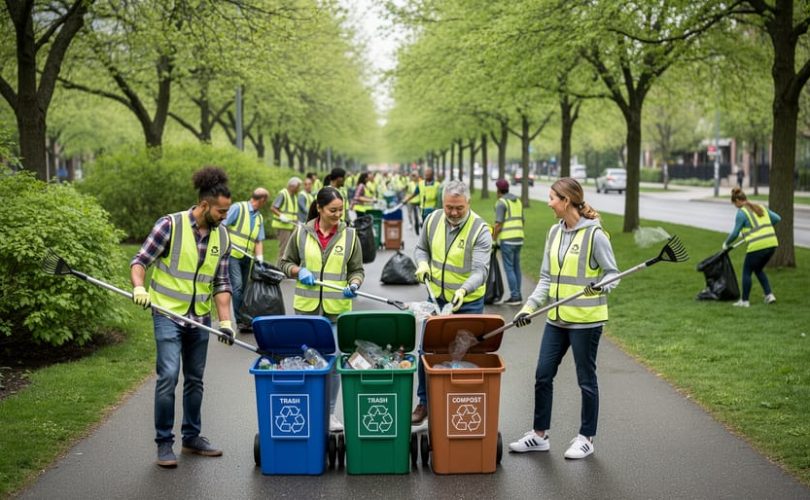
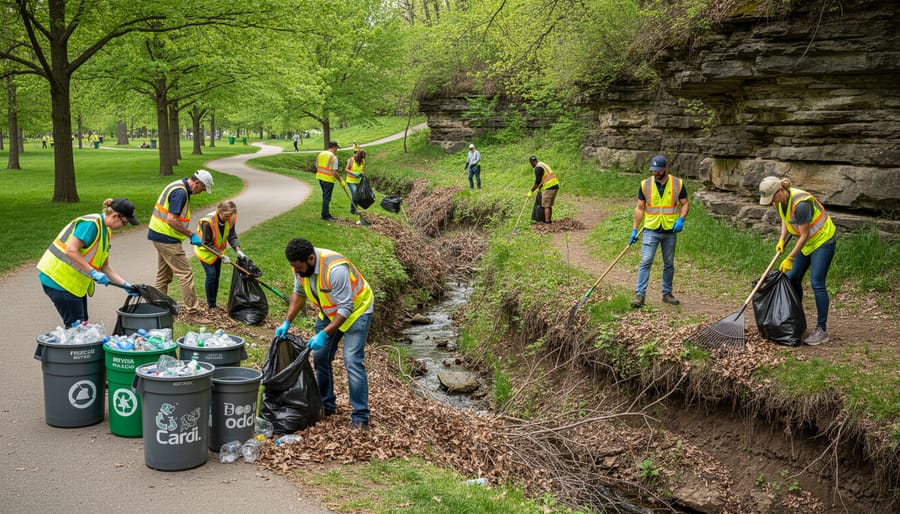
Toronto’s network of parks and ravines offers exceptional large group volunteer opportunities that combine environmental restoration with team-building in the outdoors. Cleanup days typically accommodate 15-50 volunteers working together to remove litter, clear invasive plants, and restore natural habitats along trails and waterways.
These projects work brilliantly for large groups because tasks naturally divide among team members while creating visible transformation within hours. Younger volunteers particularly respond to the immediate results: watching a littered ravine become pristine or a choked creek bed clear up creates powerful motivation. The physical nature of the work keeps everyone engaged, and minimal training means your group can start making impact within minutes of arriving with gloves and garbage bags.
3. Community Garden Build and Maintenance
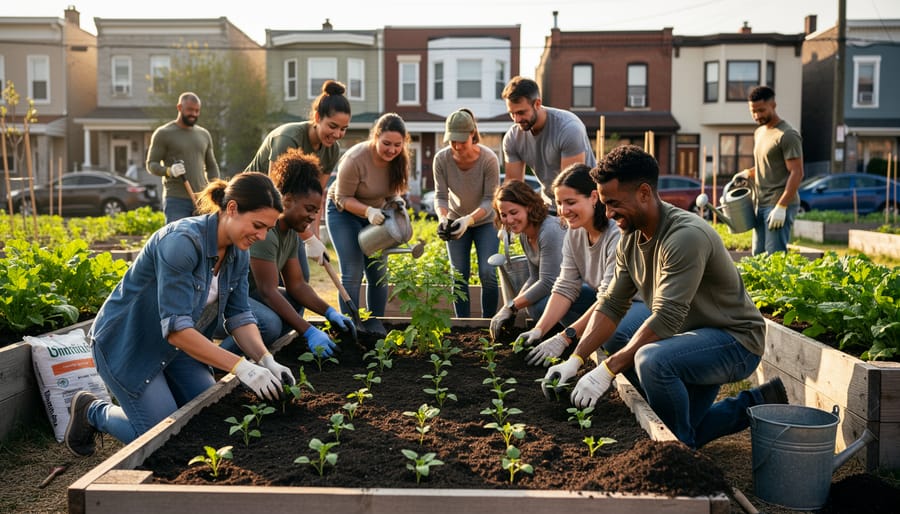
Community gardens offer exceptional large group opportunities because they accommodate varying skill levels while producing tangible, lasting results. Teams of 10-30 volunteers can transform vacant lots into thriving green spaces or help established gardens expand their growing capacity. Tasks range from building raised beds and installing irrigation systems to planting seedlings, mulching pathways, and constructing composting stations.
What makes garden projects particularly effective is their seasonal flexibility. Spring planting days, summer maintenance sessions, and fall harvest preparations each provide natural entry points for new volunteer groups. The work is inherently collaborative, one person measures lumber while another drills, creating natural teamwork rhythms that keep everyone engaged.
Toronto’s growing network of community gardens directly addresses food security in neighbourhoods with limited fresh produce access. Your group’s afternoon of labour creates spaces where families grow culturally relevant foods and build neighbourhood connections. Many gardens specifically welcome youth volunteers, offering hands-on environmental education that goes far beyond traditional classroom learning. The best part? You can return months later to see the garden flourishing, providing concrete proof of your team’s community impact.
4. Meal Preparation for Shelters and Community Kitchens
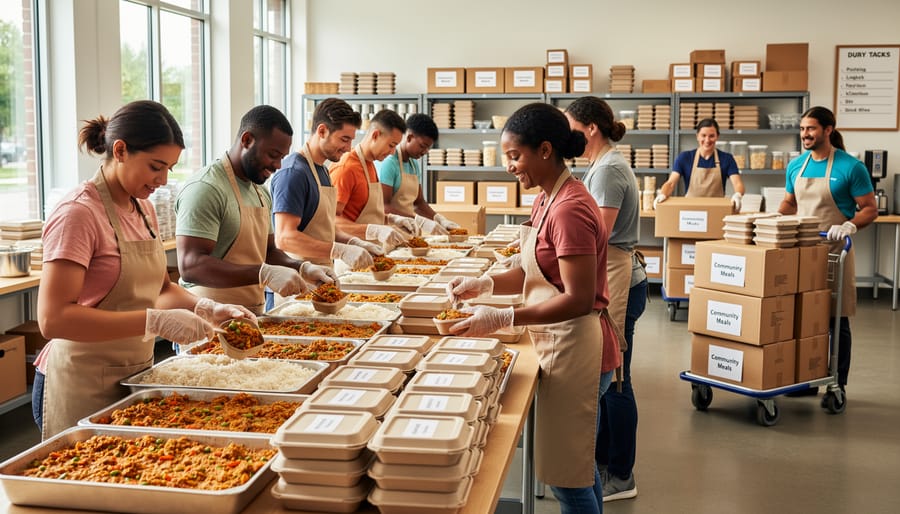
Meal preparation for shelters taps into the natural rhythm of a kitchen to create powerful teamwork dynamics. Your group divides tasks along a production line, chopping vegetables, assembling sandwiches, portioning hot meals, packaging individually, where everyone contributes regardless of cooking experience. Veterans can guide beginners through basic knife skills or recipe execution, building confidence while the clock ticks. Toronto’s community kitchens and shelter meal programs regularly accommodate groups of 15-30 volunteers for breakfast, lunch, or dinner shifts. The impact lands immediately: families eat that night because your team showed up. Unlike projects where results appear weeks later, you see completed meals stacked and ready for distribution before you leave. This direct connection between effort and nourishment makes meal prep especially meaningful for youth volunteers discovering how everyday skills translate into community support.
5. Neighbourhood Beautification Projects
Neighbourhood beautification projects transform public spaces through collaborative creativity while accommodating volunteers of all skill levels. Your group can tackle mural painting on community walls, install decorative planters along main streets, or refresh playground equipment with vibrant colours. These projects work exceptionally well for large teams because tasks naturally divide into design, painting, planting, and finishing crews.
The visual transformation happens quickly, often within a single day, giving participants immediate satisfaction and leaving a legacy the entire neighbourhood enjoys for years. Toronto’s diverse communities particularly value art that reflects local culture and identity. Youth volunteers often bring fresh artistic perspectives while learning about public art and urban design. Most projects require minimal training beyond basic painting or gardening skills, and local BIAs or community associations typically provide materials and coordination support.
6. School Supply and Backpack Assembly Drives
School supply drives transform large groups into efficient assembly lines while creating direct impact for students facing barriers to education. Teams work together to sort donated items, pencils, notebooks, rulers, backpacks, then pack complete sets based on grade-level requirements. The repetitive task structure means new volunteers can contribute immediately without extensive training, while the production-line format naturally accommodates 15-30 people working simultaneously.
This opportunity resonates particularly with youth volunteers who understand firsthand what it means to show up to school prepared. Setting up stations for different supply categories keeps everyone moving, and watching stacks of completed backpacks grow provides tangible evidence of collective effort. Many Toronto organizations coordinate these drives before September and January, making them ideal seasonal projects that directly address educational equity in your community.
7. Community Event Support and Festival Volunteering
Community events and cultural festivals across Toronto constantly need volunteer teams to help with setup, registration, crowd management, vendor coordination, and cleanup. These opportunities work exceptionally well for large groups because organizers can assign different roles based on interests and abilities, some team members might staff information booths while others manage children’s activities or direct parking. The variety keeps everyone engaged, and you’ll experience Toronto’s vibrant multicultural celebrations firsthand, from neighbourhood street festivals to city-wide cultural events. Most festivals need volunteers for 4-6 hour shifts, making it easy to coordinate around schedules. Your group becomes part of creating memorable community experiences while connecting with residents from across the city.
8. Senior Centre Activities and Companionship Programs
Senior centres across Toronto welcome large volunteer groups to facilitate social activities, game afternoons, and intergenerational programs that combat isolation among older adults. Your team can organize bingo sessions, lead craft workshops, host music performances, or facilitate conversation circles where seniors share life stories with younger volunteers. These opportunities work exceptionally well for youth groups because they create genuine two-way learning, students gain perspective and mentorship while seniors enjoy renewed energy and connection. Most centres can accommodate groups of 10-25 volunteers for scheduled programs. The activities require minimal special skills but deliver profound emotional impact. Many groups report that companionship volunteering becomes their most requested repeat activity because participants build ongoing relationships. The flexible format adapts to various engagement styles, from active game facilitation to quieter one-on-one conversations over tea.
9. Clothing and Winter Gear Sorting Drives
Clothing banks and outreach centres need consistent volunteer teams to process the steady stream of donated items flowing through their doors. Your large group can spend a session sorting clothing by type, size, and season, checking quality, and organizing items for distribution to individuals and families in need. Tasks are straightforward, inspect for damage, fold neatly, categorize systematically, making this ideal for groups with varying abilities and no specialized skills.
The indoor setting offers year-round flexibility regardless of weather, and the warehouse-style workspace easily accommodates 15-25 volunteers working simultaneously. Winter months see particularly high demand as centres prepare coats, boots, and warm clothing for Toronto’s cold season, but spring and summer clothing drives maintain steady volunteer needs. You’ll see immediate results as chaotic donation piles transform into organized, dignified shopping experiences for community members accessing these services. Many centres welcome recurring monthly commitments, allowing your group to build expertise and relationships over time.
10. Community Centre Renovation and Painting
Community centres serve as vital gathering spaces where neighbourhoods come together, and renovation projects offer large groups the chance to create lasting physical improvements. Painting walls, refreshing play areas, updating signage, or assembling new furniture transforms tired spaces into welcoming environments, and these tasks don’t require specialized training.
What makes this opportunity exceptional for large groups is the natural division of labour. Some team members can paint while others handle prep work like taping and moving furniture. Less physically intensive roles include organizing supplies or touching up details. Projects typically accommodate 15-30 volunteers, and you’ll see dramatic before-and-after results in just one day. Toronto’s network of community centres regularly welcomes volunteer renovation teams, especially during spring refresh periods. The tangible transformation creates strong team pride, knowing your work directly improves where local families gather, children play, and seniors socialize for years to come.
11. Tree Planting and Urban Greening Initiatives
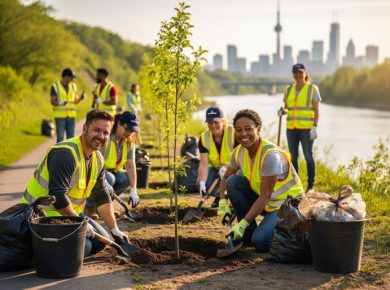
Tree planting campaigns offer large groups the chance to create a living legacy while working together outdoors. Toronto’s urban forest initiatives regularly welcome teams of 15-30 volunteers for seasonal planting events in parks, along streets, and in underserved neighborhoods that need more green cover.
The physical nature of digging, planting, mulching, and watering creates natural teamwork rhythms. Tasks accommodate varying fitness levels, some dig holes, others carry saplings, while quieter members stake and water. Youth volunteers particularly connect with knowing they’re planting trees that will shade future generations, creating a tangible environmental contribution they can revisit years later.
Spring and fall planting seasons provide ideal timing for corporate teams, school groups, and community organizations looking to make measurable environmental impact together.
12. Fundraising Event Setup and Support
Every successful charity run, gala, or community fundraiser depends on volunteers working behind the scenes long before the first guest arrives. Setup and support roles transform empty venues into functional event spaces, handling everything from registration table assembly and signage placement to tech setup and supply distribution. Groups typically split into teams tackling different zones, some arranging seating, others preparing participant packages, a few managing coat check stations or directing parking.
This opportunity works brilliantly for large groups because tasks multiply exponentially at fundraising events, and most require minimal specialized skills beyond following instructions and working efficiently. Your team creates the infrastructure that allows organizers to focus on donors and participants while the event runs smoothly. The impact feels indirect but remains essential: without reliable setup crews, fundraisers can’t happen, which means critical community programs lose their financial lifeline. Groups of 15-30 work exceptionally well, especially when events need quick turnaround times between load-in and doors opening.
Overcoming Common Large Group Volunteering Challenges
Coordinating a dozen volunteers sounds great in theory, until you’re juggling twelve conflicting calendars, three different skill levels, and someone who needs a ride from Scarborough. Here’s how Toronto’s most effective group coordinators turn potential chaos into smooth, rewarding experiences.
Start with flexible scheduling. Rather than finding one perfect date for everyone, successful coordinators poll their team with 2-3 options and commit once they hit critical mass. Most organizations appreciate knowing your numbers two weeks ahead, but many food banks and park cleanups welcome walk-ups if a few people drop out last minute.
Design roles for different comfort zones. The beauty of large groups is task variety. At a community garden build, you’ll need people comfortable with power tools, others happy to paint signs, and detail-oriented folks managing supply inventory. Toronto volunteer coordinators recommend the “station rotation” approach: set up 3-4 distinct tasks and let people switch every hour. It keeps energy high and accommodates the introvert who excels at sorting donations and the extrovert leading the cleanup crew.
Transportation often derails good intentions. Coordinate carpools through a shared spreadsheet, and choose opportunities near TTC lines when possible. Many Toronto organizations are within walking distance of subway stations, Flemingdon Park food bank, Evergreen Brick Works, and most downtown shelters offer transit-friendly access.
Keep everyone feeling essential by naming contributions. Instead of “we packed 500 meals,” try “Marcus and his team assembled 200 breakfast kits while Chen’s group handled lunches.” Recognition doesn’t require fanfare, a group text highlighting individual efforts works wonders for building momentum toward your next project together.
Making It Happen: Next Steps for Your Group
You’ve identified the opportunities that fit your group, now it’s time to turn that interest into action.
Start by gathering input from your team. Send a quick poll asking which three opportunities appeal most and what availability looks like over the next month. This builds buy-in early and makes scheduling easier. Don’t aim for perfection: pick one project that excites the majority and gets people’s hands dirty quickly.
Connect with organizations through UWindsor’s volunteer platform, where you’ll find Toronto opportunities vetted for group readiness. When you reach out, mention your group size, preferred dates, and any specific needs (accessibility, youth participants, skill levels). Most coordinators appreciate a single point of contact, so designate one person to handle communication and logistics.
Before the big day, hold a brief team meeting. Cover what to expect, what to bring (comfortable shoes, water bottles, weather-appropriate clothing), and why this work matters. Share the organization’s mission so volunteers understand the larger picture. Assign simple roles if helpful, supply coordinator, sign-in manager, photo documenter, but keep it light.
After your first project, gather feedback while enthusiasm runs high. What worked? What would make next time smoother? Then schedule your second opportunity within two months. Momentum matters: groups that volunteer once often stop, but groups that commit to a second project build lasting habits.
Your community needs what your group can offer. Pick a date, reach out, and show up ready to make a difference.
Your Impact Starts Here
Large groups don’t just volunteer, they create waves of visible change that ripple through entire neighbourhoods. When your team shows up together, you transform what might feel like logistical headaches into something powerful: collective achievement that individual volunteers simply can’t match. The 12 opportunities we’ve explored aren’t just tasks to complete; they’re doorways into Toronto’s vibrant community spirit, each one designed to turn your group’s energy into tangible impact.
The coordination challenges you worried about at the start? They’re absolutely solvable. Organizations across Toronto have refined their processes specifically for groups like yours, understanding that when they make it easy for teams to volunteer, everyone wins. UWindsor’s platform connects you directly with these opportunities, handling the logistics so you can focus on what matters: showing up and making a difference.
Your team’s first project might be a park cleanup or a food bank shift, but it won’t be your last. Toronto’s volunteer community thrives because groups like yours keep showing up, turning one-time efforts into ongoing commitments. The city’s neighbourhoods need what your team brings, energy, diversity of skills, and the ability to tackle big projects that create lasting change. Start with one opportunity from this list, and you’ll quickly discover that the real impact isn’t just what you accomplish together. It’s how volunteering together strengthens your group while strengthening the community around you.
Frequently Asked Questions
Organizing a large group volunteer project often raises practical questions about logistics, timing, and accessibility. Here are answers to the most common concerns coordinators face when planning team volunteer experiences in Toronto.
How many people constitute a ‘large group’ for volunteering purposes?
Most organizations consider groups of 10 or more people to be large groups requiring advance coordination. Many opportunities can accommodate teams of 15-30 volunteers, while some large-scale events or facilities can host groups of 50 or more.
How far in advance should we book our volunteer opportunity?
Plan at least 3-4 weeks ahead for most projects to ensure availability and proper coordination. Popular opportunities like community events or specialized projects may need 6-8 weeks notice, especially during high-demand seasons like back-to-school or holiday periods.
Are there costs involved in large group volunteering?
The vast majority of volunteer opportunities are completely free. Occasional exceptions include specialty activities requiring materials or programs where participants create items to keep, but organizations typically communicate any costs upfront during booking.
Can we bring youth volunteers, and what are the age requirements?
Many opportunities welcome youth volunteers aged 14 and up without supervision, while younger participants (often 10-13) can join when accompanied by adult group leaders. Some family-friendly projects accept all ages with appropriate adult-to-child ratios.
What if our group has varying physical abilities or accessibility needs?
Toronto’s volunteer landscape includes many inclusive opportunities with tasks adaptable to different ability levels. Communicate your group’s needs when booking so coordinators can suggest appropriate roles or make necessary accommodations.
These practical considerations shouldn’t hold your group back. Most volunteer coordinators have experience accommodating diverse teams and will work with you to create a successful, meaningful experience for everyone involved.